


By Rabbi Avraham Arieh Trugman
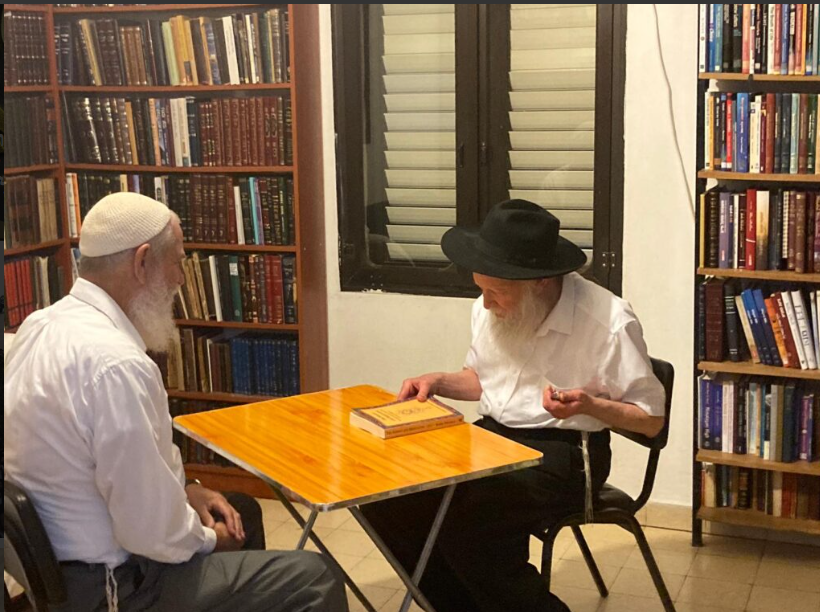
The first night of Selichot 5785 (2025), was held at the home of Rav Ginsburgh and ended at around 1:30am. I prearranged to sit alone with the Rav afterwards to commemorate—indeed, to celebrate—fifty years of our relationship. The Talmud teaches that a student does not truly comprehend his teacher’s teachings until he has been learning with and from him for forty years. Ten years ago, at the forty-year mark, we also sat together, drank a L’Chaim, and reflected upon the many highlights of those decades of learning and friendship. Now, reaching fifty years, the Rav commented that if it takes forty years for a student to fully understand his teacher, how much deeper must that understanding be after fifty years!
We sat for about half an hour, until 2:00 am. Word quickly spread that we were marking fifty years of study and connection. Very few of Rav Ginsburgh’s students can make such a claim. While many have known him for decades, only a small number have remained with him through the many stages, classes, and projects that have evolved over time.
Having been asked to share some personal reflections from these fifty years, I would like to recount some of the experiences that shaped my life through my relationship with Rav Ginsburgh. These recollections and experiences are being shared from a deeply heartfelt place in my soul.
First Encounters
I first attended a class with Rav Ginsburgh in the month of Shevat, 5735 (1975). I had arrived in Israel only about six weeks earlier and was then in the midst of becoming religious. At that time, I was studying at the Diaspora Yeshiva. That same month of Shevat I met my future wife, Rachel. It was love at first sight. We became engaged two months later and married four months after that. Everything moved with remarkable speed, guided by Divine Providence.
It was Rachel who encouraged me to attend a class with Rav Ginsburgh. She had already begun studying with him and spoke often of the depth and inspiration of his teachings. Rachel had been part of a small chevruta—just two or three women—learning with the Rav from Perek Shirah, focusing especially on finding artistic inspiration within those sacred verses.
At that time, Rav Ginsburgh lived on Rechov Charlap in Jerusalem, in a modest basement apartment. Rachel also studied with his wife, Romy, learning from the Radak’s Sefer HaMikhlal. While scanning the Rav’s bookshelf, she came across a Kabbalistic work on Hebrew names. She discovered that the root letters of her own name, Rachel, can be read as Ruach Kel—“the spirit of God.” For her, a ba’alat teshuvah who had just begun using her Hebrew name, this was a powerful affirmation of her new spiritual identity.
That first class I attended took place in the Russian Compound in Jerusalem, in a small room being used by Rav Adin Steinsaltz as part of his center, called Shefa. There were only four or five people in attendance. I remember entering without knowing what to expect. When the Rav began to teach, something extraordinary happened.
Within the first five minutes, I felt an overwhelming sense of illumination. Whether it was the lighting in the room or something deeper, I perceived what seemed to be a subtle aura surrounding his head. At that point, I was still new to Torah but that moment was life-changing. I cannot recall the exact content of the lesson—this was before I began taking detailed notes—but I remember saying to myself with complete clarity, “This is my teacher.” From that moment, I knew that my soul had found its guide.
Early Years in America and the Search for Meaning
To give a bit of background: I was born in Cleveland, Ohio, in 5709 (1949). Interestingly, though I did not know it then, Rav Ginsburgh also spent part of his teenage years in Cleveland. My own Jewish upbringing was minimal—some exposure, but not much. I attended secular schools and grew up during the 1960s, when many of my generation were searching for new meaning. I was politically active, protesting the Vietnam War, and was even briefly jailed for my involvement. Yet beneath the political activism, I was yearning for something spiritual.
After exploring many paths, I found my way back to my Jewish roots. Chabad in both Berkeley, California, and Cleveland played a significant role in reawakening my interest in Judaism, particularly its mystical dimension. That was what truly drew me in.
In the early 1970s, I joined the “Back to the Land” movement, living in rural Oregon. I built my own home and lived for several years without electricity or running water for part of the time, immersed in nature. It was there, in the stillness of the forest and the vastness of creation, that I began to sense the unity of all existence. That experience helped me understand the Shema in a profound, experiential way—that Hashem is truly One.
In 5735 (1974), during Chanukah, I arrived in Israel. Only six weeks later, I met Rachel, and our shared journey began.
Continuing the Journey
A year after those first classes at Shefa, Rachel and I became among the founding families of Moshav Mevo Modi’im. At that time, we were all students of Rav Shlomo Carlebach, filled with spiritual idealism and a desire to live close to the land. The area was remote—Highway 1 and Highway 443 had not yet been built—and we lived a simple, rustic life.
Despite the distance, I maintained my connection with Rav Ginsburgh. About a year later, I arranged for him to come and teach at the Moshav. I would drive from Mevo Modi’im to Kfar Chabad—about a 30 or 40-minute drive—pick him up, bring him to the Moshav, and drive him back afterwards. It was around Chanukah, and I still have the notes from those sessions. Many of those teachings later became the basis for my book A Hundred Meditations on the Lights of Chanukah. That period was very special for me. Those drives gave me private time with the Rav, opportunities for personal guidance and inspiration. We continued like that for several months.
The Rav’s Classes – A New World of Torah
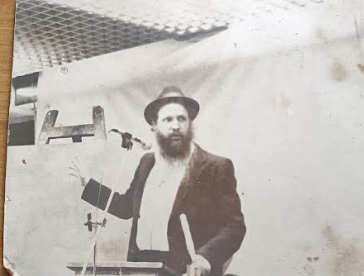
Over the next years, I attended many series of Rav Ginsburgh’s classes. There was a long series on The Fifty Gates of Understanding at the old Israel Center on Rechov Strauss, where he would teach using a blackboard, guided by small handwritten index cards. His reputation was starting to spread and many young people began to attend.
Later came classes at the Tzemach Tzedek Shul in the Old City, focused on the Alef-Bet, teachings that later were written up in his first English book, The Hebrew Letters (more on this shortly). Another unforgettable series was held in what is now Yeshivat Netiv Aryeh, near the Kotel. In those days, it was an almost abandoned structure. There, over sixteen classes, the Rav explored the first day of Creation and the deeper meanings of Ma’aseh Bereishit, the secrets of creation. Those sessions opened the gates of Kabbalah and Chassidut for me in a life-altering way and showed me how every letter and word in the Torah was infinite in meaning.
The Meah Shearim Kollel
In the early 1980s, Rav Ginsburgh became Rosh Kollel of an afternoon and evening program on Rechov Yoel 3 in Meah Shearim. About thirty men attended daily from 4:00 to 9:00 p.m. At that time, I was working on the Moshav and could only attend twice a week. Since there was no direct access to Highway 1 from the Moshav, I had a rather adventurous commute. I would slide down a steep embankment near the highway, wait under the bridge for the Rav’s taxi to pass, and join him for the ride to Jerusalem. Late at night, I would return the same way—climbing up that embankment in the dark, often waiting long minutes between passing cars hoping for a tramp. I used that time to sing, reflect, and thank Hashem for the opportunity to learn Torah.
The Rav’s teaching style at the kollel left a deep impression on me. He would take a sugya from the Talmud—perhaps an amud—and analyze it in depth, moving systematically through Rashi, Tosafot, the Rishonim, Acharonim, Halachah, and finally revealing its inner dimension through Chassidut and Kabbalah. That method—tracing an idea through its entire spiritual evolution—transformed my way of learning.
Each evening concluded with an hour or more of Chassidut, varying by day, including Likutei Moharan, Mei HaShiloach, and teachings from Rav Hillel of Paritch, among others. For someone coming from a Chabad background, the Rav’s openness to Breslov and Izhbitz teachings was refreshing and expansive. Those were extraordinary years of learning and connection—years that laid the foundation for everything that followed.
An Army Experience
In 5744 (1984), although I was already thirty-five years old, married, and a father of three children, I was drafted into the Israeli army as part of shlav bet, the secondary reserve call-up system. In those days, it was quite serious. After a short period of basic training, I suddenly found myself sent to Lebanon—still within the long and complex years of the Lebanon War.
Among the soldiers in my unit were a number of young Chabad chassidim. Naturally, I was excited to meet them and began sharing with them some of the teachings of Rav Ginsburgh, wanting to convey the depth and beauty I had received. To my surprise, they responded with sharp opposition. “What right,” they asked, “does anyone have to teach their own Torah? In Chabad, we only learn the words of the Rebbeim!”
At first, I was taken aback by their reaction, but I understood that this was a reflection of the time. In those early years, Rav Ginsburgh was considered something of an outsider within Chabad—a brilliant scholar and mystic whose independent classes, students, and writings didn’t fit neatly within established frameworks. Yet, as we know, over time this perception changed dramatically. His unique contribution to Chassidic thought came to be recognized and appreciated around the world.
I share this episode only to illustrate how the path of true innovation within Torah is rarely smooth. The Rav had received the Rebbe’s berachah to publish his teachings, and as is known, the Rav incudes that written berachah from the Rebbe in the beginning of all his books. But those early years were a time of forging new pathways.
Between Two Teachers
Throughout those years, I was blessed to be guided by two great Rebbeim—Rav Ginsburgh and Rav Shlomo Carlebach. Each influenced me profoundly in his own way, and together they shaped my spiritual outlook.
When I was with Rav Ginsburgh, he would often ask about Rav Shlomo—his teachings, his music, and the deep impact he had on people. Likewise, when I was with Rav Shlomo, he would ask me to share what I was learning from Rav Ginsburgh. At a certain point, I felt it was time to bring them together. I proposed that we hold a farbrengen at our Moshav, and both readily agreed. That gathering was the first of three farbrengens I organized with the two of them. The first one, in fact, is still available on YouTube today.
It was truly one of the great highlights of my life—to witness these two spiritual giants sitting together, each radiating his own unique light, and yet harmonizing as one. For many years afterward, when I would give over Torah on Friday nights at the Moshav, I made it my practice to share a teaching from Rav Shlomo and a teaching from Rav Ginsburgh, showing how—though their styles and language were seemingly different—they were expressing the same essential truths.
The Birth of The Hebrew Letters
In 5747 (1987), some years after Rav Ginsburgh’s classes on the Alef-Bet that had so inspired me, I approached him with an idea. At that time, he had published only one Hebrew book, Sod Hashem Liyrei’av, and none yet in English. I suggested that we collaborate on a book about the Hebrew letters, drawing from those earlier teachings.
Rav Ginsburgh, following the derech of the Baal Shem Tov, taught that every letter manifested on three planes of existence—Olamot, Neshamot, Elokut: Worlds, Souls, and Divinity. Every aspect of creation, he explained, manifests on these three levels. Each letter, also possesses a form, a name, and a number.
That became the foundation of his first published work, The Hebrew Letters, which has since been reprinted many times and is now considered a classic. For about a year, I went to his home twice a week. We would sit for hours going through each letter in depth—its form, its meaning, its numerical significance. I took extensive handwritten notes—this was before computers were common—and my wife, Rachel, typed them up on the Moshav’s ancient “Einstein” computer program. It was really little more than a glorified typewriter, but it served its purpose. I would bring the notes back to the Rav for his edits and clarifications, and over time, the manuscript took shape.
Shlichut in Denver
In 5748 (1988), I was offered the position of youth director for the Orthodox Union’s National Conference of Synagogue Youth (NCSY), to establish a new region in Denver, Colorado. We intended to stay for 2-3 years but ended up there for seven years, until 5755 (1995).
Before leaving, the book on the Hebrew letters was in its final editing stages. Rabbi Moshe Vishnevsky joined the project and did a magnificent job refining the text. Working together with Jason Aronson, then one of the leading Jewish publishers in America, I succeeded in having the book published under the title The Alef-Beit. Though the cover and name were different, the content was identical. Later I produced 23, short videos on each letter and an introductory explanation. These videos have been viewed through the years by literally millions of people.
While in Denver, I continued my efforts to spread Torah and Chassidut, and during those years, Rav Ginsburgh came to America on a teaching tour. He gave a major class in Denver at Rabbi Mordechai Twersky’s shul, TRI, on the holiness of Eretz Yisrael.
I will never forget one exchange from that evening. During the question-and-answer session, a woman from Boulder expressed her discomfort with the Rav’s statements about Eretz Yisrael and the uniqueness of Am Yisrael. “I’m offended,” she said. “Why divide between Jews and non-Jews? Aren’t we all connected to God?”
The Rav listened patiently and then replied with gentleness and wisdom: “You may not realize it,” he told her, “but the reason you feel this way is davka because you are Jewish.” He then explained the principle of Hachna’ah, Havdalah, and Hamtakah—submission, separation, and sweetening—teaching that while there are distinctions and boundaries in this world, the ultimate goal is Hamtakah: the sweet unity of all creation uniting in God’s light.
This was long before the phrase “global village” was in use, yet that is precisely what he was describing—a world ultimately united in Divine consciousness. I later heard that this encounter deeply affected the woman, and that she eventually became religious.
While the Rav was in Denver, I also arranged an interview for the Rav with the local Jewish newspaper, The Intermountain Jewish News. To my surprise, the journalist assigned was not Jewish, but he was deeply thoughtful and asked excellent questions. When he inquired whether non-Jews could study Kabbalah, the Rav paused and said, “If it helps them become better people, they may learn about Kabbalah.” This was in the early 1990s—decades before Rav Ginsburgh began speaking openly about the “Fourth Revolution” and the universal expansion of Torah consciousness—but even then, his inclusiveness and compassion were evident.
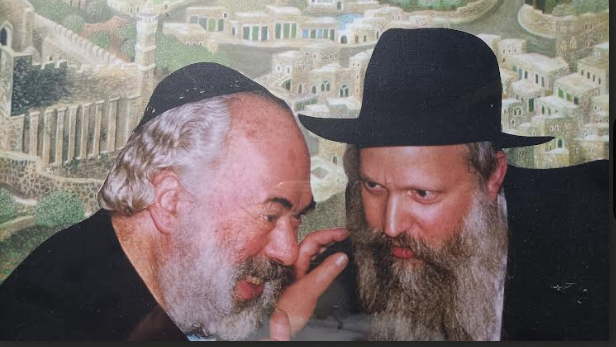
In the summer of 1993, we returned to Israel for the summer. While in Israel there was a Hachnasat Sefer Torah at the Od Yosef Chai Yeshiva where Rav Ginsburgh was the Rosh yeshivah. Rav Ginsburgh, asked me to arrange for Rav Shlomo Carlebach to come and sing at this event. I gladly did so, and the gathering drew thousands of people. Rav Shlomo as he played, brought everyone to their feet, dancing and singing. Rav Ginsburgh, like everyone, was visibly moved by the experience.
When I returned to Israel in 5755 (1995), I worked with Gal Einai in Har Nof with Moshe Vishnevsky, focusing on among other things, distributing the Rav’s English-language teachings tapes. During that year, we released scores of tapes, making his Torah accessible to a much wider audience.
Then, in 5756 (1996), came the shocking news of Rav Ginsburgh’s arrest on charges of “incitement.” I remember vividly the night of Purim that year. Israel was reeling from a series of bus bombings, and public anger was intense. The Rav celebrated that Purim night in Tel Aviv and completely focused on Megillat Esther and the spiritual meaning of fighting against Haman and Amalek—nothing inflammatory, nothing political. Yet soon after, the authorities, in a state of fear and tension, detained him under an old British Mandate statute that allowed imprisonment without formal charges.
Everyone in the office mobilized to help—writing letters, contacting rabbis in Israel and abroad, calling journalists, and rallying support for his release. I was present at the Supreme Court on the day of the hearing regarding his arrest and his being held in jail without charges. The presiding judge, a woman, stated openly: “I have read all the materials you have presented in your interrogations. I do not agree with your views, but this is a democratic country. You have expressed opinions, not committed crimes. Therefore, you are to be released.”
When the decision was announced, people burst into spontaneous celebration. Bottles of mashke appeared from under coats, and L’Chaims were poured all around. Later, we gathered in the underground parking area where the Rav was to be released. When he emerged, singing and dancing broke out. The joy was indescribable. That moment, witnessing light emerging from darkness—was for all of us a profound affirmation of faith.
Awakening the Spark Within
In 5756 (1996), around the same time that Rav Ginsburgh was released, I was working on his second English book, Awakening the Spark Within: Five Dynamics of Leadership That Can Change the World. Though I was not the final editor, I organized and prepared much of the material that later became the basis for the finished volume, which was then refined by a professional editor. It was a privilege to be part of the process, helping to bring the Rav’s profound teachings into a clear and accessible English form.
Around the year 5760 (2000), I began writing my own books. Since then, Baruch Hashem, I have written twenty-four books, each one including a blessing by Rav Ginsburgh in the beginning of the book. In every book, I have acknowledged his influence, for his teachings run like a living current through all of my work. I am happy to say those books are being read all over the world.
My first book was published when I was fifty years old, and since then, almost every year has brought forth a new one. Being only a few years younger than the Rav, I have often felt that our paths have continued to evolve in parallel.
Torat Chesed Seminary
Around the year 5758 (1998) Rav Ginsburgh began a seminary in Jerusalem for young English speaking girls from America. It began as a very small seminary but by the third year it was turning the corner and really growing. The curriculum was based on the Rav’s Torah Academy and The Jewish Experience, a model that the Rav and I created together. Both these models emphasized offering the full range of secular knowledge and Torah wisdom as taught in the Torah Academy, as well as a well-rounded experience of Judaism’s many facets. Unfortunately, in 5760 (2000) the Second Intifada broke out and all the parents brought the daughters back home, effectively closing the seminary.
“If Not Now, When”
When I reached my sixtieth birthday, I had an epiphany. I had always loved music and had tried playing many instruments over the years, but only one ever truly spoke to me — the dulcimer, a rare three- or four-string instrument that rests on the lap. Its sound lies somewhere between a guitar, a mandolin, and at times, even a sitar, depending on how it is played.
On that birthday, the teaching of Hillel from Pirkei Avot came vividly to mind: “Im lo achshav, eimatai?” — “If not now, when?” Until then, I had composed niggunim privately, for myself alone. But that day, I knew it was time to share them.
With much gratitude, I must mention Rav Shlomo Katz, who has long been close to the teachings and music of both Rav Shlomo Carlebach and Rav Ginsburgh and serves as the lead singer at the annual Yud-Tet Kislev celebrations, and who performs many of the Rav’s recorded melodies. Rav Shlomo was enormously helpful and encouraging as I ventured into the unfamiliar world of music recording.
In just seven years, I recorded nine music CDs, the last four with my son, Efrayim, an accomplished musician and composer in his own right.
(Parenthetically, when Efrayim was married in Jerusalem, Rav Ginsburgh taught at the reception and together we walked him to his chuppah).
One of my favorite experiences during that period was bringing each new CD to Rav Ginsburgh’s home. We would sit together, I would play the songs for him on a CD player I would bring and describe how each song had come to be — the inspiration, the musicians, the intent behind the music. We would go through every track. These were deeply special moments for me, filled with joy and gratitude.
The Continual Flow of Learning
Over the years, there were countless other classes I attended regularly beyond the ones mentioned above. For a long time, my wife and I went every Motzaei Shabbat to Rav Ginsburgh’s class at Beit Knesset Merkazi in Kfar Chabad on the weekly Torah portion. Each Purim, I would be at the yeshivah of Rav Yossi Ginsburgh in Ramat Aviv, where the Rav gave over his teachings in a very joyous atmosphere.
There was also a remarkable year-long series in Ramat Aviv in which he explored what he called the “triplets” of the Tanya — the threefold phrases and expressions used by the Baal HaTanya to describe key concepts, and how they correspond to Chochmah, Binah, and Da’at. He would analyze each instance in depth, showing why the order of these three sefirot varied and what deeper meanings were embedded in each combination.
When our Moshav celebrated its twenty-fifth anniversary in 5761 (2001) — we held a number of events, including a special evening where Rav Ginsburgh came to speak and bless the community. It was a deeply moving moment, as he offered words of inspiration for the Moshav.
Teaching Around the World
Over the past thirty years, I have been blessed to teach in more than fifty cities around the world — Shabbatonim, festivals, retreats, and holiday events. For seven years, I led davening and taught at the Isabella Freedman Center in Connecticut on Rosh Hashanah, where a few hundred people would gather each year. More recently, I have been among those leading Pesach retreats at the Pearlstone Center near Baltimore, attended by two hundred participants or more. My daughter, Chani is the event planner at these amazing Pesach retreats.
On one of my many trips to Toronto, it so happened that I was there while Rabbi Moshe Genuth was opening the Baal Shem Tov Center, which was to be the first of several such centers inspired by Rav Ginsburgh’s vision. The Rav was scheduled to attend the opening, but tragically, just beforehand, one of his grandsons was killed in a bicycle accident, and he understandably canceled his trip. Rav Genuth had invested so much effort in the project, so during my stay I did my best to help — teaching, meeting people, and lending support. Rabbi Genuth remained there for a full year, guiding the new center’s growth and influence.
A Voice in English
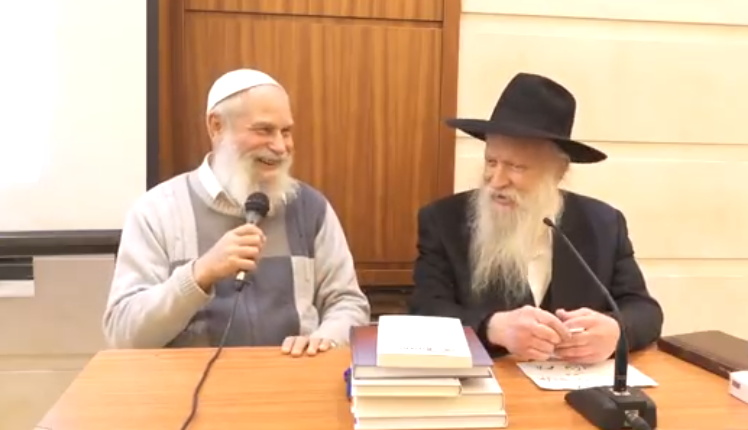
For about three years, Rav Ginsburgh gave a monthly Sunday evening class in English in Jerusalem, which was broadcast worldwide. I had the honor of serving as the emcee for those evenings. Often, due to traffic, the Rav arrived a few minutes late, and I would fill the time by sharing brief teachings from him or updates on new books and classes.
Those sessions were among my favorites. The series explored Biblical personalities through the lens of the sefirot—revealing the aspect of each sefirah as manifest in a wide range of Biblical figures. The clarity and depth of those teachings were breathtaking. I sincerely hope that Gal Einai will one day publish them as a book.
The influence of all these teachings and the many series of classes described above runs deeply through my own work, particularly my recent book The Sefirot and Meditation. Of all my writings, this book most directly reflects the Rav’s teachings — his understanding of the inter-inclusion of the sefirot, their influence on all aspects of reality, the dynamics of the partzufim, and the role of hitbonenut, contemplation, in internalizing Torah.
In the early years, I remember how the Rav would often conclude a long, intricate class by saying, “And now everyone should meditate on what we learned.” I took that to heart. Each week, after writing extensive notes by hand, I would spend days contemplating the ideas until they became part of me. I should also mention that my book shelves include virtually every volume the Rav has written in Hebrew and English and I am continually reading and rereading them. They are also an essential source of research for my own books.
A Small Kollel, Great Illumination
About six or seven years ago, a half-day Chabad kollel was established where Rav Ginsburgh would come each morning to teach briefly before davening. I began attending regularly, though it required leaving the Moshav very early to beat the traffic.
At first, the Rav’s talk lasted about fifteen minutes, but I once mentioned to him that it was quite an effort on my part to travel so far, for such a short session, and asked if he might speak a little longer. He graciously agreed, and soon the morning lesson extended to nearly forty-five minutes. Those learning sessions became very precious to me. Unlike larger lectures where only the Rav would speak, they were intimate and interactive, with ten or fifteen participants. It was perfectly acceptable to ask questions or offer insights. The atmosphere was open, dynamic, and alive — an authentic beit midrash of pnimiut haTorah.
Fires, Plagues, and Perseverance
Six years ago, our Moshav endured a devastating fire that destroyed most of the houses and although my house was miraculously saved, it left us without electricity or running water for months. We were displaced for nearly seven months, and just as we returned home, the COVID pandemic struck, shutting everything down. Then came the war and the Rav’s medical challenges.
Through all of this, my main connection with the Rav has been mostly through email correspondence and watching online classes. Baruch Hashem, the availability of live broadcasts has enabled so many of us to remain connected even from afar. Lately, as the Rav has become stronger, I delight in attending the live classes as often as my work permits.
Recently, I began writing articles in English for Gal Einai’s weekly Wonders magazine, which is shared online, and when possible, in booklet form; and additionally, for the weekly online Gal Einai newsletter. Both bring the Torah of Rav Ginsburgh to a world-wide audience. For me it is a great privilege and brings me back full circle to be involved directly in spreading the Rav’s Torah.
Fifty Years – A Soul Connection
And so, as we sat together once again after Selichot, marking fifty years of connection, I felt a deep awareness that this relationship has been one of the great blessings of my life. The Rav is not only my teacher, my Rebbe, but also my soul friend and spiritual companion. From that very first class, when I sensed an aura around his head and recognized him as my teacher, I have felt a soul-bond that has only deepened over the decades.
The Rav himself has taught that the connection between a teacher and a student is a kind of soul-mate relationship — a dimension of zivug, a spiritual pairing. It has truly been the privilege of a lifetime to be connected to Rav Ginsburgh — to learn from him, to share his teachings throughout the world, and to do my small part as a shaliach of his Torah through my books, classes, and music.
As we ended that late-night conversation after Selichot, we smiled and blessed one another — “another fifty years.”
May it be so!!

