


The Afterlife
Parashat Chayei Sarah begins with the verse: “The lifetime of Sarah was one hundred years, twenty years, and seven years; the years of Sarah’s life.”[1] The concluding words, “the years of Sarah’s life,” seem redundant, for the verse opens with the words “the lifetime of Sarah.” Yet, it is just such redundancies that alert us to deeper meanings in the text. In this case, the fact that the Hebrew word for “the years” (shenei) can also mean “two” reveals an important truth, for it suggests that Sarah had two sets of years, or “two lifetimes.”
While the oral tradition makes many references to an afterlife, the Written Torah never explicitly mentions one. This makes the allusion in our verse all the more important. Indeed, perhaps an even more obvious allusion to the notion of an afterlife in this portion is the simple fact that even though the portion speaks about Sarah’s death it is called Chayei Sarah, a phrase that can be translated literally as “the lifetimes of Sarah.” That Sarah’s “two lifetimes” are both defined as “living” makes sense considering the rabbinic teaching that, “the righteous in death are called alive, while the wicked, even in life, are called dead.”[2]
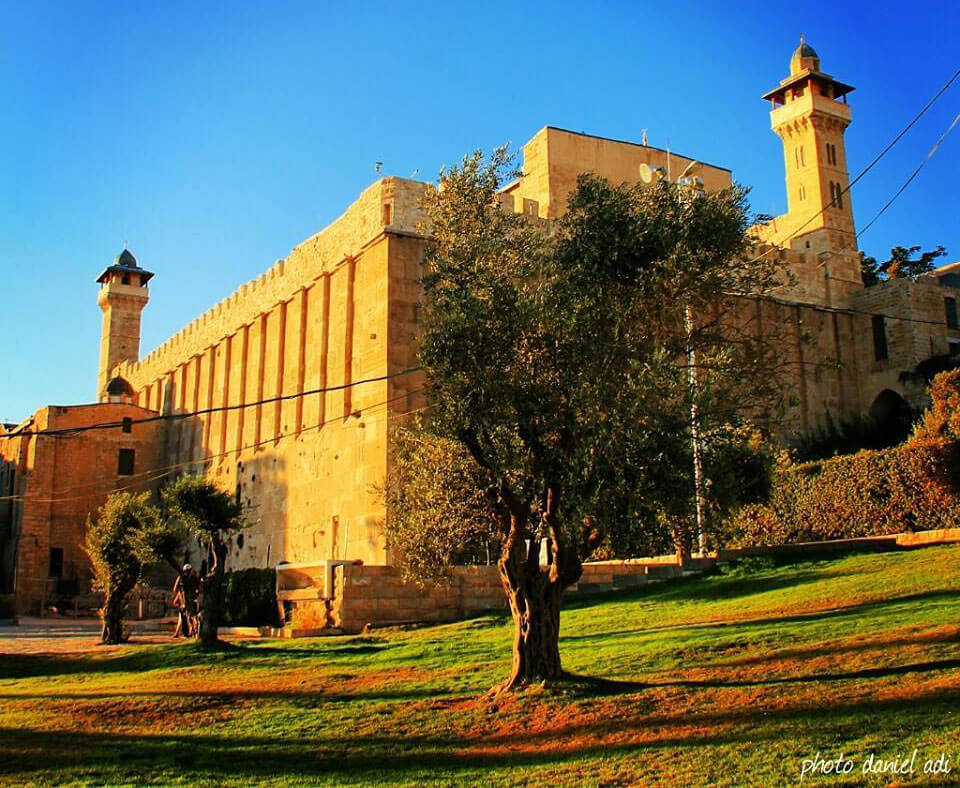
Significantly, Sarah’s death leads to Abraham’s first purchase of land in the Land of Canaan: a life-affirming symbol that Abraham and Sarah’s descendants will eventually inherit the entire land and transform it into the Land of Israel. Abraham’s purchase of the Cave of the Machpeilah and the surrounding land for 400 silver shekels[3] alludes to this as the sages teach that the borders of the Land of Israel are 400 parsah (each parsah being a distance of approximately four kilometers) by 400 parsah.[4] Furthermore, the Zohar explicitly states that the Cave of Machpeilah is a microcosm of the entire land of Israel.[5]
These 400 silver shekels also allude to the Zohar’s tradition that the soul inherits 400 “worlds” of Divine pleasure in the World to Come.[6] Thus, the Land of Israel—symbolized by the Cave of Machpeilah—can be understood as the place where Divine pleasure and revelation are most accessible. The Land of Israel serves as a bridge between the physical and the spiritual, between this world and the World to Come. It is the place where the fine line between life and death is transcended.
From Efron to Abraham
The Torah concludes the story of Abraham’s purchase of Sarah’s burial plot by stating that the field with its cave “rose up … unto Abraham for a purchase.”[7] Rashi explains that the wording “rose up” literally means “entered the possession of.” However, he also explains the word metaphorically, citing the Midrash that the land Abraham purchased to bury Sarah was elevated because it left a commoner’s possession and entered a king’s.[8]
The commoner referred to is Efron who owned the field and cave Abraham wanted to purchase. At first, he offered to give it as a gift but in the end asked for an enormous amount of money. The numerical value of Efron (עֶפְרֹן) is also 400, the same as an “evil eye” (רַע עַיִן), indicating that this was Efron’s mode of perceiving others. Abraham, on the other hand, looked upon everyone with “pure eyes” (טְהוֹר עֵינַיִם), an expression whose value is also 400. Thus, through the purchase of the field and the cave by Abraham for 400 pieces of silver it was elevated to a new level altogether, nullifying Efron’s “evil eye.”
Tav, the Land of Israel, and Divine Consciousness
The number 400 is the numerical value of the last letter in the Hebrew alphabet, tav (ת). The name of this letter when spelled out is תיו, which equals 416. Since the land is 400 by 400 parsah it also alludes to two letters tav. If we substitute the letter tav with its name, then we have 2 times תיו, or 2 times 416, which equals 832. Amazingly, 832 is the exact value of the words, “Land of Israel” (אֶרֶץ יִשְׂרָאֵל).
Every day in the morning service we recite praises of the angels on High. The prophet Isaiah relates that one group of angels proclaims “Holy, holy, holy is the God of Hosts, the whole world is full of His glory.”[9] The sages juxtapose a response spoken by another group of angels and taken from the Book of Ezekiel, “Blessed is the glory of God from His place.”[10]
We would normally say that God’s place is the upper realms, where the angels surround Him like hosts. Yet, when multiplying the numerical value of God’s essential four-letter Name, Havayah (י–הוה) whose value is 26 by the word “glory” (כָּבוֹד), whose value is 32, the product is once again, “Land of Israel” (אֶרֶץ יִשְׂרָאֵל), 832. In other words, even though the glory of God is manifest everywhere and at every moment, it is most revealed and concentrated in the Land of Israel.
This confirms a profound teaching of the Maggid of Mezritch. The Ba’al Shem Tov was often heard saying the syllable “af” (אַף). The Maggid of Mezritch explained that his meaning was that “af” is the initials of the words, “Emanation is here” (אֲצִילוּת פֹּה). The World of Emanation, Atzilut, is the highest and most Divinely infused of all of the worlds. The Ba’al Shem Tov was declaring that even though a plain reading of Kabbalah would have us think that Emanation is somewhere else and is inaccessible to the common man, this is not the case. Emanation is present everywhere, even in every facet of life experienced by common people. For Emanation is the consciousness that “God is all and all is God,” and every person can attain this understanding, wherever they are and in whatever situation they find themselves in. Thus, although in one sense the four Kabbalistic Worlds are hierarchical, in another sense they are each manifest in a holistic manner in this the lowest of all of the created worlds. It is in the Land of Israel that this consciousness of Emanation is most easily attained, and from our Holyland, it is meant to spread to every corner of reality, the secret of “the Land of Israel is destined to spread everywhere in the world.”
Cure Before Ailment
On close inspection, the number 400 is already mentioned in the Torah when God made His first covenant with Abraham, the covenant over the Land of Israel: “On that day God made a covenant with Abram saying, ‘To your descendants I have given this land.’”[11] At this covenant, known as the “Covenant Between the Shards,” God revealed to Abraham the future of the Jewish people: “Know with certainty that your offspring will be strangers in a land not their own, they will serve them, and they will oppress them for four hundred years…. And the fourth generation shall return here.”[12] Thus, Abraham’s purchase of his first piece of the Land of Israel for 400 shekels of silver was prophetically sinking roots in the land so his descendants could return, thus “providing the cure even before the ailment.”
Elevating Sparks from Esau to David
Later in parashat Vayishlach, when Jacob was returning with his family after twenty years outside of the land, the number 400 reappears. Esau came to meet Jacob with 400 men so that he could prevent him from re-entering the Land that is 400 by 400 parsah.[13] By merit of Jacob’s twenty years of Divine service, when he spiritually redeemed and elevated sparks of Divine holiness from the depths of exile (20 squared[14] is also 400), he was able to subdue Esau and his 400 men.
After the encounter between Esau and Jacob ends peacefully, the Torah reports that Esau left for Mount Seir. Curiously, the 400 men who came with him go unmentioned. Once Jacob prevailed over Esau’s angel and then emerged the next day unscathed from his confrontation with Esau, the spiritual strength of the 400 men was dissipated to the point that they actually disappeared from the scene altogether.
Paralleling the law of conservation of energy, the 400 men and the energy they embody were actually transformed by what transpired. They reappeared at a later time in Jewish history as the 400 men who were the first to recognize David’s greatness—even while he was still being pursued by Saul—and joined his ranks before he became king.[15] David went on to become king of all of Israel and was more successful than any other figure in Jewish history in establishing a kingdom incorporating nearly the entire 400 parsah by 400 parsah recognized by the sages. David who had red hair was actually considered the rectification of Esau who is also known as Edom, “the red one.” The transformation of the 400 men of Esau to the incarnated 400 men of David symbolizes this rectification.[16]
Here we see a beautiful example of how “connecting the dots” within the Torah text, in this case the number 400, reveals deep connections that otherwise might go unrecognized. Jewish numerology, reveals a deeper set of correspondences than immediately apparent in the literal text and points to an entire mathematical structure underlying the Torah. Similar to how physics and chemistry rest on a mathematical foundation, so too, deeper dimensions of Torah are revealed through gematria and a host of other numerical methodologies.
Yet, it is not Kabbalah alone that employs gematria and other insights gleaned from mathematical phenomena. The Talmud, Midrash and Rashi, for example, also use these techniques of learning on occasion in order to point out a cogent idea, and it has been used as well by a wide range of commentators throughout the ages. In as much as Kabbalah seeks to make known the oneness of God and the interconnectedness of all reality, gematria and other numerical methodologies assume a major role in revealing this unity through the Torah text.
[1]. Genesis 23:1.
[2]. Berachot 18a-b.
[3]. Genesis 23:14-16.
[4]. Megillah 3ª.
[5]. Zohar 1:128b.
[6]. Ibid. 1:123b.
[7]. Genesis 23:17-18 and v. 20.
[8]. Bereishit Rabbah 58:8.
[9]. Isaiah 6:3.
[10]. Ezekiel 3:12.
[11]. Genesis 15:18.
[12]. Ibid. 15:13-16.
[13]. Ibid. 32:7.
[14]. Revealing the Divine spark of holiness can be described as finding the reality enclothed within reality. There are three basic figurate numbers that correspond to the three basic relationships discussed in Chasidic philosophy: evolution (הִשְׁתַּלְשְׁלוּת) corresponds to triangular (מְשֻׁלָּשִׁים) numbers, enclothement (הִתְלַבְּשׁוּת) corresponds to square (רְבוּעִים) numbers, and immersion/inspiration (הַשְׁרָאָה) corresponds to interface (הַשְׁרָאָה) numbers, also known as centered-square numbers. The triangle of a number n is the sum of integers from 1 to n. The square of a number is n2. The inspirational value of a number n is n2 ┴ (n ┴ 1)2.
[15]. 1 Samuel 22:2; 25:13.
[16]. For more on the number 400 and the letter tav, see The Hebrew Letters, pp. 326-337.

