


Money
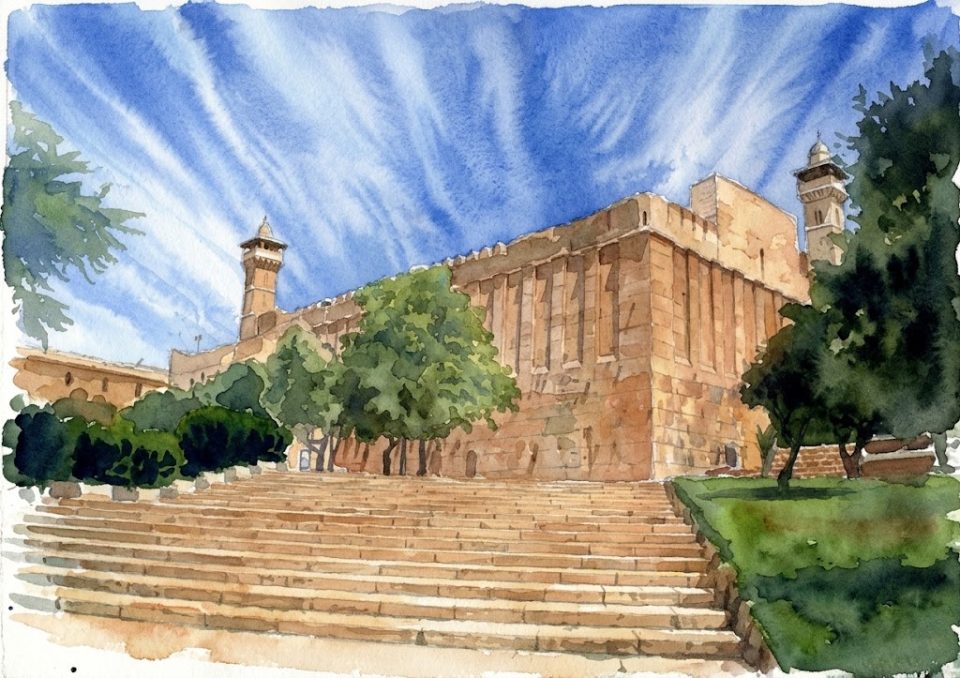
Parshat Chayei Sarah begins with the story of Sarah’s burial. Though the Land of Canaan was promised to Abraham by God, for now he had to swallow the bitter pill of having to purchase a plot of land to bury his beloved wife. To that end he bought the field of Machpeilah with its double cave from Ephron the Hittite, “Abraham weighed out for Ephron the silver that he had mentioned… 400 shekel of universally tradeable silver”[1] (וַיִּשְׁקֹל אַבְרָהָם לְעֶפְרֹן אֶת־הַכֶּסֶף אֲשֶׁר דִּבֶּר… אַרְבַּע מֵאוֹת שֶׁקֶל כֶּסֶף עֹבֵר לַסֹּחֵר).
In ancient times people exchanged goods and precious metals. But how could you know exactly how much silver or gold someone had given you and how much it was worth? Well, the entire ancient world was a lot less objective than ours. If we want to know what an ounce of silver is, we use a scale and our electronic scales are very precise. If we want to know if what we are holding is pure silver (universally tradeable), that is a bit trickier because only a special process can tell us what percentage of the metal we are being handed is pure silver and what percentage is not.
In Abraham’s time, the only way to know how much silver someone was offering was to actually weigh the silver. To weigh in Hebrew is לִשְׁקֹל and the three-letter root of this verb is שקל. That is why the Torah says that the amount of silver Abraham gave Ephron the Hittite for the field of the Machpelah is referred to as shekels, derived from the 3-letter root of weighing: שקל. The earliest “coins” per se were named after the act of weighing which ensured their value.
From Coins to Nature
Many centuries later, a new and easier method for knowing a piece of silver’s weight (and purity) was developed. The lump of silver was minted into the shape of a coin and was then engraved (or embossed) with the likeness of the king guaranteeing its value. The earliest coins with such engravings date to about the 7th century BCE. The engravings were stamped on the coins and the word for stamping in Aramaic is טִבְעָא, which then became טֶבַע in Hebrew. This earlier form of the word is echoed in the Talmud’s treatment of issues relating to the difference between “money” (טִבְעָא) and “goods” (פִּירִי). Incidentally, the word for “goods” in Aramaic and in Hebrew stems from “fruit” (פְּרִי).
In the middle ages, the root used for “stamp” or “coin” (מַטְבֵּעַ), which is טֶבַע, became the root for “nature,” because like in English, nature could denote the character or persona of a person—like the imprint of the king’s likeness on a coin—and it could be Nature with a capital n, referring to the recurring character or persona of the world’s forces, like tides and currents in the ocean, or the qualities of materials, and the repetition of the annual seasons, the movement of the stars, etc. In Hebrew, it was immediately noted that the value of “the nature” (הַטֶּבַע) specifically referring to the repetitive events in Nature, i.e., the natural world, was the same as God’s Name, Elokim (אֱ-לֹהִים). Thus, it became popular to think of God as imprinting Himself, as it were, on the natural world.
We Do Not Yearn for Money
Shekel is thus the earliest form of coinage and has become the most generic Hebrew word for a denomination of currency. Nachmanides writes that Moses also made a coin, which he called shekel. The value of the word shekel (שֶׁקֶל) is 430. Clearly, coinage paved the way for attributing monetary value to objects, which we can define as the degree to which people want to possess said objects. Indeed, 430 is also the value of nefesh (נֶפֶשׁ), the Hebrew word for the psyche, which also means “to want” or “to yearn for.” In fact, the Hebrew word for silver (כֶּסֶף), out of which Abraham’s coins were minted, also means “yearning,” as in the verse, “because you longed for your father’s home”[2] (כִּי נִכְסֹף נִכְסַפְתָּה לְבֵית אָבִיךָ). The value of shekel, 430, is also the value of 4 central phrases that describe the souls and psyches and yearnings of Jews of different stature, as they correspond to the four Worlds, or sources of the different souls.[3] The first, corresponding to the World of Action is “a simple Jew” (יְהוּדִי פָּשׁוּט). Corresponding to the World of Formation, the world of emotions is, “a jovial chasid” (חָסִיד שָׂמֵחַ). The third corresponding to the World of Creation, whose essence is intellectual, is “biblically learned” (יוֹדֵעַ סֵפֶר). Finally, the highest appellation corresponding to the World of Emanation where consciousness is exclusively devoted to holiness is, “a tzaddik, foundation of the world” (צַדִּיק יְסוֹד עוֹלָם).
Despite the clear differences between individual Jews, differences that stem from the varying roots of their souls and their conduct in life, all souls are equal, just like all coins of a denomination—all shekels—have the same intrinsic value. In fact, the root of shekel, not only means “to weigh,” it also means “equal” (שָׁקוּל). Two phrases associated with Shabbat and the shofar reveal this equality. Whenever one prepares (or purchases) something for Shabbat, it is customary to say, “in honor of the holy Shabbat” (לִכְבוֹד שַׁבַּת קֹדֶשׁ), whose initials are shekel (שֶׁקֶל). Similarly, the blessing we say before blowing the shofar on Rosh HaShanah with the intent of (among other things) awakening our souls as one is “to hear the sound of the shofar” (לִשְׁמֹעַ קוֹל שׁוֹפָר). Again, the initials spell shekel (שֶׁקֶל).
Breaking Nature’s Uniformity
The negative side of equality is the notion that Nature is uniform; not just that Nature is the same everywhere and at all times, but that Nature does not treat individuals differently. Divine Providence is the opposite and was Abraham’s great discovery and the root of his faith and trust in God: God judges reality based on personal merit and individual conduct. It was on this basis that Abraham tried to prevent the destruction of Sodom and Gomorrah, “It would be indiscriminate of You to do such a thing—to kill the righteous with the wicked—it would be a profanity if the righteous and the wicked be treated uniformly; will the Judge of the entire Earth not conduct justice?”[4] The uniformity of nature and of reality was the doctrine held and espoused by Amalek, who attacked Israel as they came out of Egypt. Amalek wished to cool the belief that God judges on the basis of merit and therefore saved the Israelites from the Egyptians.
One might say that the Amalekites believed that all things were equal, שָׁקוּל, the meaning related to the word shekel. Every year, we renew our commitment to cancelling the Godless Amalekite picture of reality in the month of Adar, when we commemorate the bringing of the half-shekel in the time of the Temple. The half-shekel symbolizes the cutting of Nature’s uniformity in half, as it were, suggesting that a human being is only one half of a whole. The other half is God, who places the soul in the human, indicating that God is personally involved and provides Providence over all human affairs.
Haran and Hebron
Let us explore even further the letters of the word Hebron in Hebrew: Chevron, חֶבְרוֹן. When God told Abraham to leave his country, birthplace and parental home to go to the land that He would show him, Abraham was living in a place called Haran, חָרָן. Rashi explains that until Abraham, God’s anger was kindled against the world. [5] He bases his explanation on the name Haran deriving from the root meaning “anger.” Until Abraham, the first 20 generations of mankind experienced one calamity after another: the expulsion from the Garden of Eden, Cain killing Abel, the introduction of idol worship, the Flood that wiped out humanity, and the dispersion after the Tower of Babel. God’s response to all of this is symbolized in what we would term “anger.”
It is interesting to note the similarities in the names of the places where Abraham came from, and where he resided in Israel and buried his wife. The name Hebron in Hebrew, Chevron (חֶבְרוֹן), has the same letters as Haran in Hebrew, Charan (חָרָן), with the additional letters beit (ב)and vav (ו).[6] Both of these letters symbolize connection: beit equals two, implying a relationship between two people or entities, and the vav means “and” which is the essential connector in language. Therefore, we can see that the names of these places in Rashi’s explanations reveal the transition that not only Abraham made by leaving everything behind in following God’s command, but also God’s relationship with the world transitioning from “anger” to intimate relationship. The root of Hebron (חֶבְרוֹן) is also the root of the word meaning “friend,” chaver (חָבֵר).
The addition of the letter beit, further alludes to the four couples (four pairs of two) that are buried in Kiryat Arba. It also reveals the meaning of Machpelah, the name of the double cave where Sarah is buried. The addition of the letter vav alludes to another tradition that the burial place of our Patriarchs and Matriarchs, along with Adam and Eve, is the connecting channel between this world and the World to Come, as discussed above. The Land of Israel connects God and mankind, physical and spiritual, life and eternal life of the soul after death, and this world and the World to Come. Similar to how the Temple Mount serves as a conduit for prayer to rise to heaven, as Jacob stated after his dream of a ladder that connected earth to heaven; the place where our Patriarchs and Matriarchs are buried in Hebron also has the spiritual power of connecting us to a higher reality.
Abraham: Best Friend to God
On Shabbat, many congregations begin the prayers of Kabbalat Shabbat by singing the Beautiful piyyut (liturgical poem), Yedid Nefesh, which refers to the Almighty as the “beloved of the soul.” It was Abraham who not only realized the truth of there being One God and then making it his life’s mission to teach the entire world this truth, he was also the first human being to connect to God in such an intimate manner, or as Rashi comments, he became “friends with God.” It was in Hebron that Abraham became connected to God on the level of intimate “friends.”
The prophet Isaiah says in the name of God: “But you, Israel My servant, Jacob whom I have chosen, the seed of Abraham, who loved Me.”[7] This verse can also be understood as “the seed of Abraham, who I love” or even “Abraham, my friend.”
The term friend here does not imply a casual relationship, rather it indicates a close eternal connection called brit, or covenant. The covenant that the Almighty made with Abraham is unbreakable; transcending any other type of relationship.[8] Abraham merited to turn God’s “anger” into love, resetting human history that will eventually lead to redemption for the entire world.
Marriage and the Land of Israel
In purchasing the Cave of Machpelah, Abraham established the Jewish people’s relation with the Land of Israel. The first Mishnah in the tractate of Kiddushin teaches that one of the ways that a woman becomes officially married is through a monetary exchange from the man to the woman. The Talmud teaches that the source for this idea is learnt from a gezeirah shavah, a method which compares similar words that appear in Torah text in different contexts.
It says regarding marriage: “When a man takes a woman,”[9] and it says regarding Abraham’s acquisition of the Cave of Machpelah, where he buried Sarah: “I give forth the money for the field, take it from me.”[10]
Just as the word take in Genesis is referring to acquiring through money, so too the word take by marriage is referring to acquiring through the agency of money. From here, we learn that since there is a connection between the laws of marriage and the acquisition of The Land of Israel in the above verses, the relationship of the Jewish people to the Land of Israel is akin to a marriage. This further confirms the great love and loyalty shown throughout history by the people of Israel for our treasured homeland.
Masculine and Feminine Perspectives
To understand this better: In relationship to God as Creator, all of creation is considered the receptive feminine energy. This is alluded to in the first and last letters of the first word in the Torah, bereishit, being a beit and tav, (בְּרֵאשִׁית) spelling the word “daughter,” bat (בָּת). Even further, throughout the books of the prophets, Israel is allegorically referred to as the “wife” of God; sometimes as the wayward, disloyal wife, and other times in very intimate, loving terms.
Yet, Israel is considered the masculine in relation to Shabbat and the Land of Israel.[11] One tradition relates that God paired together the days of creation, so that days one and two, three and four, and five and six, each had their mate. The seventh day, Shabbat, inquired of God who its mate would be. God’s answer was that the people of Israel would be Shabbat’s mate.[12]
In the time of the Talmud, the Sages would greet Shabbat as if greeting a bride. Rabbi Chanina would say: “Come let us go and greet the Shabbat Queen. Rabbi Yannai would say: “Enter O bride, enter O bride.[13] The Arizal and the Kabbalists of Safed in the mid-1500s created a Friday evening prayer service called Kabbalat Shabbat, based on the earlier Talmudic precedent. The climax of Kabbalat Shabbat is the beloved song Lecha Dodi, whose repeated refrain is “Come my Beloved [God] to greet the bride; the Presence of Shabbat, let us welcome!” Similarly, the people of Israel relate to the Land of Israel as a beloved bride.
Thus, in relation to God we are the feminine while in relation to both Shabbat and the Land of Israel we are the masculine. In both scenarios, we are speaking of relationships of eternal love and intimacy.
[1]. Genesis 23:16.
[2]. Genesis 31:30.
[3]. See El Olam HaKabbalah, pp. 149–151.
[4]. Genesis 18:25.
[5]. Ibid. 12:32.
[6]. Class on Parshat Vayeitzei, 2 Kislev תשע"ב.
[7]. 41:8.
[8]. Genesis 17: 4-8.
[9]. Deuteronomy 24:1.
[10]. Genesis 23:3.
[11]. The Mystery of Marriage, p. 207.
[12]. Bereishit Rabbah 11:8.
[13]. Shabbat 119a.

