


Rabbi Chaim ben Attar, known eponymously by his Torah commentary as the holy Or HaChaim, was born in 5456 (1696) in Salé, Morocco, to his father Rabbi Moshe, and learned Torah from his grandfather Rabbi Chaim ben Attar the Elder. He married his relative Petzunyah and was appointed to lead the yeshivah in Salé. He became known there as a holy man of God, regularly taught Torah before the community, and served as a charity collector. Since his wife did not bear him children, he married a second wife, Esther, and both his wives lived with him until the end of his days in Jerusalem. After a series of disputes and persecutions against him, he made aliyah to the Land of Israel, passing through Livorno, Italy, where he printed his famous commentary on the Torah. There is a tradition that he wrote his commentary especially for his daughters. In Italy, he raised financial support for his move to the Land of Israel and for maintaining the yeshivah he planned to establish there.
At the end of 5741 (1741), he arrived with his students in Acco, where the yeshivah was first established. The invitation from the Jews of Tiberias to establish his seat in their city was not followed through, and after a brief period of settlement in the village of Peki'in in the Galilee, they moved to Jerusalem at the end of 5742 (1742), where his yeshivah Midrash Kenesset Yisrael was reestablished. Less than a year later, he departed this world and was laid to rest on the 15th of Tammuz 5743 (1743) in the ancient cemetery on Mount Olives.
The holy Rebbe Avraham Shalom Halberstam, head of the Stropkov dynasty and the author of Divrei Shalom, of blessed memory, related at a Melaveh Malkah in Cracow in the name of his father, the holy Rebbe Yechezkel Shraga Halberstam, author of Divrei Yechezkel of Shineve (Sieniawa, Poland), of blessed memory, who related the following story upon his return from the Land of Israel:
[It is known that in 5629 (1869), the Shinever Rebbe visited the Land of Israel and stayed in Tzfat and Jerusalem, and in 5631 (1871) he returned to Galicia]:
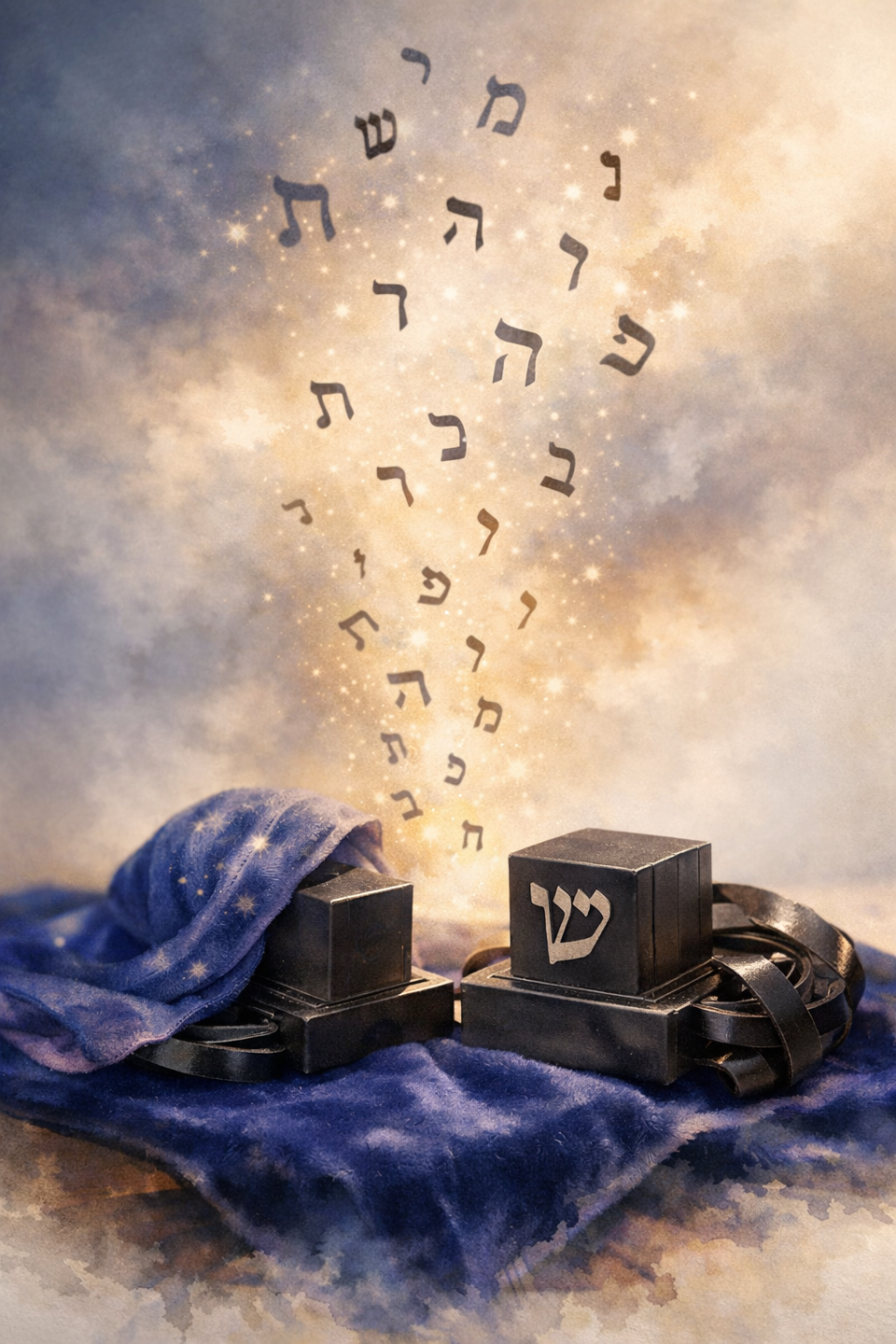
The holy and pure Rabbi, awesome and sublime, Rabbi Chaim ben Attar, of blessed memory, author of the holy book Or HaChaim, had two wives. Before his passing, the women wept before him, asking him to advise them how they would earn their livelihood after his death. He said to them: “Behold, I give you my tefillin (phylacteries), and after my death, publicize in all places that whoever wishes to pray with my tefillin may come and pray with them. In exchange, each person who prays with them will pay a certain sum, and from this you will earn your livelihood. But one extremely important warning: you must take great care that anyone who places the tefillin on his head must not, God forbid, speak mundane words while the tefillin are on his head. The tefillin are holy, and with mundane speech, God forbid, their holiness will be blemished and the letters inked on the parchments will disperse into the air and the tefillin will immediately become invalid for use.
After the Or Hachaim passed on, the widows followed his instructions and announced the opportunity to pray with his tefillin. Jews came with great longing to pray with the holy tefillin, and from this his widows earned their livelihood.
Once, a great merchant came and prayed with the tefillin, and suddenly a distinguished gentleman came and said he had to urgently speak with the merchant and could not wait until after the prayer because he was hurrying on his way. The widows always guarded the entrance to the study hall when someone had put on the Or HaChaim’s tefillin, requiring him to pray in seclusion so that it would not be possible for him to speak mundane words while wearing the holy tefillin.
That gentleman had come in great haste and entered without permission, and the women had not noticed. He exchanged some words with the merchant. When the widows saw that he had entered, they cried out with a great cry, “How have you done this evil deed, to speak of mundane matters while wearing these holy tefillin?” They checked the tefillin and found that they had no letters, for they had all ascended to the heavens.
The holy Or HaChaim was a messianic figure. In Chasidut, many stories and sayings have been handed down about this, and we particularly note the following story:
Once, a printer named Asher brought the holy Rebbe, Pinchas of Koritz, a set of the Five Books of Moses that he had printed with the commentary Or HaChaim inside. When the tzaddik opened the books, he happened upon the Torah portion of Re’eh at the verse, “If there will be among you a needy person from one of your brothers,” (Deuteronomy 15:7). Rebbe Pinchas knew that the Or HaChaim had explained that this verse alludes to the “one” among your brothers, i.e., the Mashiach, and he wrote in his commentary: “the Mashiach—his name is Chaim.”
But in this printing, Rebbe Pinchas saw that the words, “his name is Chaim” had been omitted. He immediately turned to the printer and asked him, “Why did you omit these words?” The printer replied: “Because he was referring to himself!”
Immediately, Rebbe Pinchasa opened the Book of Numbers to the Torah portion of Naso, to the verse, “And the woman shall say, ‘Amen, Amen” (Numbers 5:22) and looked at Rashi’s commentary. Rashi explains why the woman says “Amen” twice, “Amen if [she has been intimate] with this man, Amen if with another man.” The word for “another” is acher (אַחֵר), but Rebbe Pinchas showed the printer that in his printing it was copied erroneously and read, “Asher” (אָשֵׁר), the printer’s name. Rebbe Pinchas said to him, “Here is where you have signed your name,” and the man’s face turned pale.
Befitting such a tzaddik who was the Mashiach of his generation, the wives of the holy Rabbi Chaim ben Attar were also special women. Despite being married to the same man, they lived in peace and exceptional friendship. Moreover, they embody in many ways the so-called elevation of kingdom—the Kabbalistic idea that as the Messianic era approaches, the status of the feminine is elevated until the masculine and the feminine become equal in stature.
The Or HaChaim’s first wife, Petzunya, was particularly distinguished in this regard. She was known for her deep wisdom and even donned tefillin, a practice the Sages say was upheld by Michal, the daughter of King Saul. In our story, the connection between both women together and their husband’s tefillin stands out.
In Kabbalah, it is said that when a husband puts on tefillin, the tefillah (singular of tefillin) of the hand is considered and acts like it is the tefillah of the head for his wife. In an inner dimension, the husband thereby fulfills his wife’s “obligation,” as it were, regarding the mitzvah of tefillin. This is also why he first dons the hand tefillah and only then the head tefillah, which is his alone. But the wife of the Or HaChaim was not satisfied with this, and she put on tefillin herself. Later, both of her husband’s tefillin—the head and the hand—passed into her possession and to that of her peer Esther. It would seem that the head tefillah belonged especially to the scholarly Petzunya, while the hand tefillah belonged to Esther, with whom the holy Or HaChaim had children thereby fulfilling the commandment to “be fruitful and multiply.”
What can the women of our era learn from this? It is known in Chasidut that tefillin is “draw down Divine consciousness” (מוֹחִין). What does this mean? In the story, the drawing down of Divine consciousness was expressed in bringing the Or HaChaim’s tefillin to the worshippers and in his wives’ careful attention to the words of those putting them on. As a directive for the women of our generation, drawing down Divine consciousness means spreading Torah and teaching it to others, as it is written in the midrash[1] that performing the commandment of tefillin is comparable to learning Torah all day and all night. A woman who engages in this, within the family and even more so outside of her family (by organizing Torah classes and women’s groups), merits thereby the spiritual wearing of tefillin: drawing down Divine consciousness—the light of Torah, to all who hear.
[1]. Midrash Tehillim on Psalms 1:2. See in length in the essay Itta BeMidrash Tilim 5653, the essay recited traditionally in Chabad by a Bar Mitzvah boy.

