


Rabbi Moshe Biderman of Lelov was born in 5537 (1777) to his father Rabbi David of Lelov, a disciple of the Seer of Lublin. He was a student of Rabbi Yeshaya of Pshedborzh, and in his second marriage, he wed Rivkah Rachel, the daughter of the Holy Jew of Peshischa. The tzaddikim of his generation greatly revered him and praised him in extraordinary terms. The Ruzhiner, for example, said that he had never seen a bearer of a broken heart like Rabbi Moshe. From 5603 (1843) to 5610 (1850), he served as rabbi in the town of Pshedborzh, but all his days he aspired to ascend to the Land of Israel and expressed his intention to hasten the redemption. At the end of 5610, he finally decided to ascend to the Land, parted from the great Chasidic leaders in Poland, and arrived in the Land of Israel in the month of Cheshvan 5611 (1850) together with a large part of his family. After a few days, he fell ill and shortly thereafter departed, only seventy-four days after arriving in the Land, on the 13th of Tevet. He was buried in the cemetery on the Mount of Olives, near the tomb of the prophet Zechariah.
When Rabbi Moshe of Lelov journeyed to the Land of Israel, the sea voyage was extremely difficult. The ship was supposed to be at sea for several months, including the month of Tishrei, and Rabbi Moshe made sure to prepare in advance a shofar, the Four Species, and boards to build a sukkah on the ship.
As Sukkot approached, Rabbi David saw that the willow branches he had brought with him had completely withered and were no longer fit for the mitzvah of the Four Species. He turned to the ship's captain and asked him to divert the ship to one of the ports where it would be possible to obtain willows. The captain mocked him: "Should I disrupt the entire plan for a few branches?" Rabbi Moshe offered him a substantial sum of money, but the captain stood his ground. Seeing this, Rabbi Moshe offered him all the money that he had set aside to support him in his final days in Jerusalem.
When the captain saw the enormous sum of money, he changed his mind and sailed to one of the nearby islands. There, the tzaddik found willows, and with great joy fulfilled the mitzvah of the Four Species on the ship.
During the journey to the Holy Land, the ship anchored in a city on the Romanian coast, while the sailors waited for a wind to take the ship to Istanbul. Meanwhile, Reb Mendel, the Rebbe's attendant, went to the city to obtain food for the long journey. When the ship was about to set sail, the attendant had not yet returned from his errands. The Rebbe and his people pleaded with the captain to wait for him, saying it was dangerous to leave a lone man in a foreign city. But the captain did not heed their words and decided to set sail and continue their voyage.
On Friday night, when the Rebbe stood to make kiddush over the wine, he poured his cup and took it in both hands with his face aflame. He stood like this for three hours and finally said: "I will not make kiddush over the wine before Mendel is here!" At that moment, a knock was heard on the cabin door, and on its threshold stood Mendel the attendant, who immediately fell into the room, fainting.
When he regained consciousness, the Rebbe ordered him not to tell what had happened to him. Only after many years, when he was on his deathbed, Mendel related the story: When he descended from the ship, he was overcome with confusion. He began to walk aimlessly through the city streets, not knowing where he was headed. He walked and walked endlessly, until on Friday night he heard them—a euphemism for the impure forces—whispering among themselves: "What shall we do? The old man is shaking the worlds, and he's not willing to make kiddush until we return his attendant to him." Suddenly, a strong wind began to blow, and Mendel felt as if he was flying through the air and plunging into the ship. Then he understood that our holy Rebbe had drawn him out from among the external forces and saved him from them.
In Tractate Berachot, it is said about the harmful spirits—the impure forces: "These weak knees, they are from them; these legs that stumble, they are from them." In the legs, more than anywhere else in the body, there is a danger that the impure forces will draw their sustenance, and when the legs of Torah scholars falter, it stems from this. In our story too, when the impure forces seize the attendant, they make him run back and forth without knowing where he is going.
In Kabbalah, the legs correspond to the behavioral sefirot victory (netzach) and thanksgiving (hod). These are the sefirot associated with practicality and being able to walk in the world outside of oneself, in contrast to the more internal sefirot of the intellect and the emotions. Interestingly, these sefirot are also associated with the willow branches that the tzaddik cherished so much, those lacking taste and smell. From this, we can understand the strength and weakness of victory and thanksgiving:
On the one hand, the sefirot of the legs are stable; they are less prone to changes and deliberations like the mind and heart. The habitual, behavioral forces are all about action: “Intellectual understanding, feelings? What does they have to do with anything? Get up and do something!” From their perspective, victory and acknowledgment are the two sefirot that reflect the unchanging power of the crown (keter), the seat of faith that is above all intellect and feeling. On the other hand, for precisely the same reason, they are prone to withering and becoming insensitive; they can easily become heartless, unmotivated, actions or lifeless rote that lacks thought, or attention. A beautiful metaphor for this is a person at a wedding or other joyous occasion, and while everyone is dancing and rejoicing, his knees feel weak and heavy. He has no desire and vitality to make them spring upward (the sages call the knees, "springs").
What causes this heaviness? The Tanya explains that tzaddikim succeed in changing their minds and hearts themselves, transforming them from evil to good. The beinoni (intermediate person), on the other hand, serves God on the practical level of the soul: in thought, speech, and action. He may experience a state of heaviness and dullness of heart because the heart is not open to Godliness. Instead, it is full of excessive self-awareness, from which the tzaddik is protected. This is expressed, as mentioned, in the legs of the soul of the beinoni: victory and acknowledgment (or thanksgiving). With regard to the sefirah of victory (netzach), a person struggles to sanctify himself and abstain even from what is permitted. He attempts to overcome the inclination that entices him not to perform a good deed that is not a complete obligation, to overcome his laziness for the sake of greater closeness to God. Regarding thanksgiving, an intermediate (a beinoni) may find it difficult to open his heart in prayer, to sincerely express thanks for the good he received from the Creator, and to recognize that “This time I will praise God, for I have taken more than my share.”
In our story, the attendant falls into the hands of the impure forces in such a way that he can no longer save himself. He needs the help of the tzaddik, whose Divine consciousness protects him from such a fall. The tzaddik’s willow branches are full of devotion to God beyond reason and knowledge, and he is ready to give all his wealth for them. Hence, he can be fulfilling the principle that, “a tzaddik makes a decree and the Holy Blessed One fulfills it.” As explained elsewhere,[1] this is a quality belonging to the sefirot victory and thanksgiving of the tzaddikim, those who wrestle with God as it were, causing Him to joyfully admit, “My children have defeated Me!”
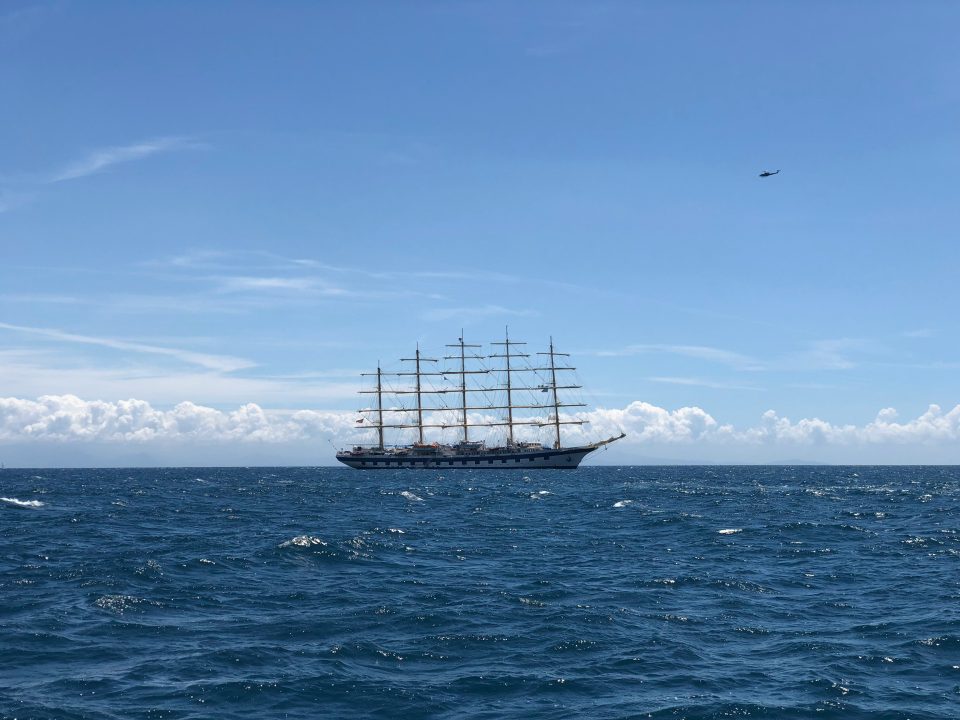
Photo by Aashish Pareek on Unsplash
[1]. See our Hebrew volume, Emunah VeMuda’ut.

