


Everyone speaks about the importance of unity, but how do we truly achieve unity?
We are all familiar with the well-known Midrash (taught even in kindergarten) about the Four Species symbolizing the unity of the Jewish people: the simple Jews are like the aravah (willow) with no taste or fragrance, Torah scholars are like the tasty fruit of the lulav (palm branch), flavor but no fragrance, those who perform mitzvot are like the hadas (myrtle) with its pleasant fragrance but no taste, and the righteous are like the etrog (citron) with both taste and fragrance. All of them must come together, "and they shall all be bound as one bundle."
Four Types of Unity
Let us focus on a different explanation (from chasidic teachings), where each of the four species individually points to a special type of unity.
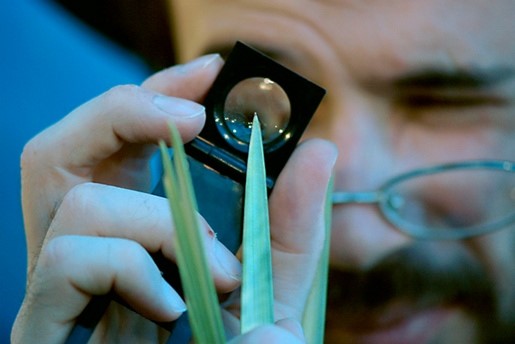
We begin with the hadas: the leaves of the ritually kosher hadas grow in sets of three, emerging from a single point. The aravah grows densely along the riverbanks, and in Aramaic, they are called "achvana," which means growing in brotherhood. The lulav’s leaves are tightly bound together around one central line, like the spine in the human body, and the palm tree itself is unique in that it has one central trunk. The etrog grows on the tree throughout the entire year, thus ‘absorbing’ all the changes of the seasons and times.
These represent four kinds of unity among the Jewish people:
The hadas symbolizes unity stemming from a shared origin, like the leaves emerging from a single point. Despite all the differences between us, the various styles, and the disagreements — we all share a common past: we are all descendants of the unique nation, with the same three Patriarchs, symbolized by the three leaves of the hadas. And even if we don’t fully understand what that past means, we can still 'smell' traces of something good that was once here.
The aravah symbolizes unity through a shared sense of the present. After all, we are all in the same boat (or pressure cooker…), and the terror perpetrated against the Jewish People does not distinguish between an ultra-Orthodox Jew from Bnei Brak and his non-observant brother in Tel Aviv. We all need to get along and find a way to communicate, to which the leaves of the aravah, which resemble lips, allude.
The lulav represents unity through a shared sense of the future, like the leaves of the lulav converging and pointing in one direction, and like the palm tree that soars upward.
The etrog represents the sense of shared Jewish destiny — past, present, and future — a destiny that is often expressed through suffering, like the etrog fruit, which endures changes in time, temperature, and winds. This shared destiny softens the Jewish heart, symbolized by the etrog, which resembles the heart, turning the Jew into a prayerful, humble figure in need.
The Two Sides of Leadership
Now we ask, who leads here? With all due respect to the hadas and aravah, it is clear that the prominent figures among the four species are the etrog on one side and the lulav on the other. The hadas and aravah represent groups—two willows and three myrtles—and thus do not lead, but the lulav and etrog stand alone.
The ideal Jewish leader must resemble the etrog—not in the sense that he should be kept in a protective box—but in being sensitive and prayerful, with a heart, like King David, whose essence is summed up in the words: "And I am prayer."
However, someone who is only soft and round like an etrog cannot lead and guide. A leader must also know how to show the way, like the pointed arrow of the lulav, to unite the people in a forward movement and to make cutting decisions when necessary. And if need be, the lulav can also be a sword, fighting and conquering, raised high as a symbol of victory.
The Leader like the Point of the Sword
When we observe the public sphere today, it seems that there's plenty of room for unity in the style of the hadas, aravah, and etrog. It is quite feasible to speak about a shared past—hadas-style—and to foster a sense of basic unity around that common denominator. We can also focus on our shared present—aravah-style—and realize that we must learn to coexist (though such understandings might quickly wither, like a dry willow). A shared internal feeling, a deep Jewish emotion that resonates in the heart—etrog-style—is also something that, thank God, is increasingly being embraced.
However, the sharpness of the lulav may still feel intimidating. To commit to having a shared future, not merely rolling along together, but with real goals and objectives, requires embracing Jewish pride, like the lulav that stands tall above the others. It means having a backbone that takes responsibility and makes decisions. Every Jew has something internal to be proud of, something with which to transform and repair the world.
Ultimately, the blessing that we make when performing the mitzvah of the Four Species is “on the taking of the lulav.” It is only the leading arrow of the lulav that turns all these different kinds of unity into a singular unity that can advance us along the path, until we reach a leader—a king—who embodies both the softness of the etrog and the firmness of the lulav, and around whom we are all united.

