


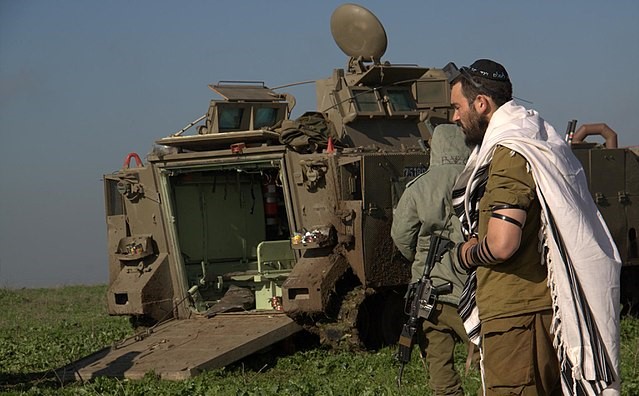
The primary role of the army is "milchemet mitzvah," a commanded war, to defend the Jewish people and conquer and protect the Land of Israel. The king-leader has the authority to conscript citizens as needed, both in times of war and relative peace, and the citizens' duty is to enlist and not evade service. The sense of mutual responsibility, love of Israel, and unity of Israel obligates participation with the public and sharing the burden, not to be like those of whom it is said, "They came not to help of God… among the mighty," "Shall your brethren go to war, and shall you sit here?!"
In the military systems, one must be careful to observe mitzvot and study Torah, maintain purity and holiness, as it is written: "And you shall keep yourself from every evil thing… for Havayah your God walks in the midst of your camp… therefore shall your camp be holy." There is a special need to recruit God-fearing and righteous individuals, like the great warriors in Jewish history: Abraham and Joshua, King David and the Hasmoneans.
Indeed, there are different roles within the Jewish people. In the army itself, there are front-line fighters and those serving in the rear, each according to their skills and the public need. Similarly, it is possible to exempt essential civilian functionaries from military service altogether. Likewise, it is appropriate to exempt from conscription Torah scholars and righteous individuals whose lives are dedicated to Torah and divine service, like the tribe of Levi who were not conscripted into the army (generally) as they were dedicated to God's service and teaching Torah. All are enlisted for the sake of the community! But each in their proper role, and thus they help each other: "If not for David [who was engaged in Torah study], Yoav would not have waged war, and if not for Yoav, David would not have engaged in Torah study."
Torah study belongs to everyone, at every age and in every situation, but there is special importance to continuous and focused study at a young age – a vital need for the learner himself and a crucial need for the entire nation to have Torah scholars engaged in study and preparing to be teachers and leaders. The age of conscription according to the Torah is twenty (when a person's spiritual maturity is completed, as explained in Halachah and Kabbalah) – until then, the learner encompasses the Torah and perfects his knowledge without worries and the burden of livelihood. Therefore, yeshiva students who "kill themselves in the tent of Torah" and for whom "Torah is their craft" should be allowed exemption from conscription (exemption or deferment). This is the foundation for the position of the great Torah sages of our generation: "Yeshiva students should not be conscripted and should not go out in the army. And their study of our holy Torah with diligence and persistence protects and saves our Holy Land and those who dwell in it."
How will it be determined in practice who will be conscripted into the army (at age twenty) and who will continue to engage in Torah? The king and those acting on his behalf will examine the situation and find for each individual (by 'Divine Providence') their proper place.

